
本文重點:說明 Googlebot 2 MB 抓取限制如何運作,以及如何透過 Will it Crawl? 快速檢查網站是否可被完整索引。
近期 Google 搜尋中心有一些頁面進行更新,其中比較重要、值得網站管理員關注的是 Googlebot 檢索器將原有的網頁大小限制從 15 MB 調整為 2 MB,簡單來說 Google 只會抓取支援文件類型的前 2 MB 內容,PDF 則為前 64 MB。這意味著如果網頁太大、超過檢索器支援的大小,超出的部分會被自動忽略,雖然說這項限制很少有網站會達到,若有疑慮依然可以自行檢測。
Googlebot 2 MB 限制運作方式
Googlebot 檢索器只會檢索網頁前 2 MB 內容,而且這項限制是指「未壓縮」大小,不包含其他資源加入的大小,HTML 引用的各項資源(例如 CSS 和 JavaScript)也都受相同檔案大小上限限制,圖片部分則是 15 MB,若發現網頁好像無法被搜尋引擎正確檢索時,應該可以檢查一下有沒有超過限制。
如何檢查網頁是否超過 2 MB?
那麼要如何知道網頁有沒有超過 2 MB 大小限制呢?最簡單的方法就是使用瀏覽器內建的開發者工具,直接查看網頁文件大小即可,絕大多數 HTML 文件應該都遠小於 2 MB,正常情況下應該不會遇到,如果有的話,很大機率是使用 Base64 編碼內嵌的圖片或字型所致。
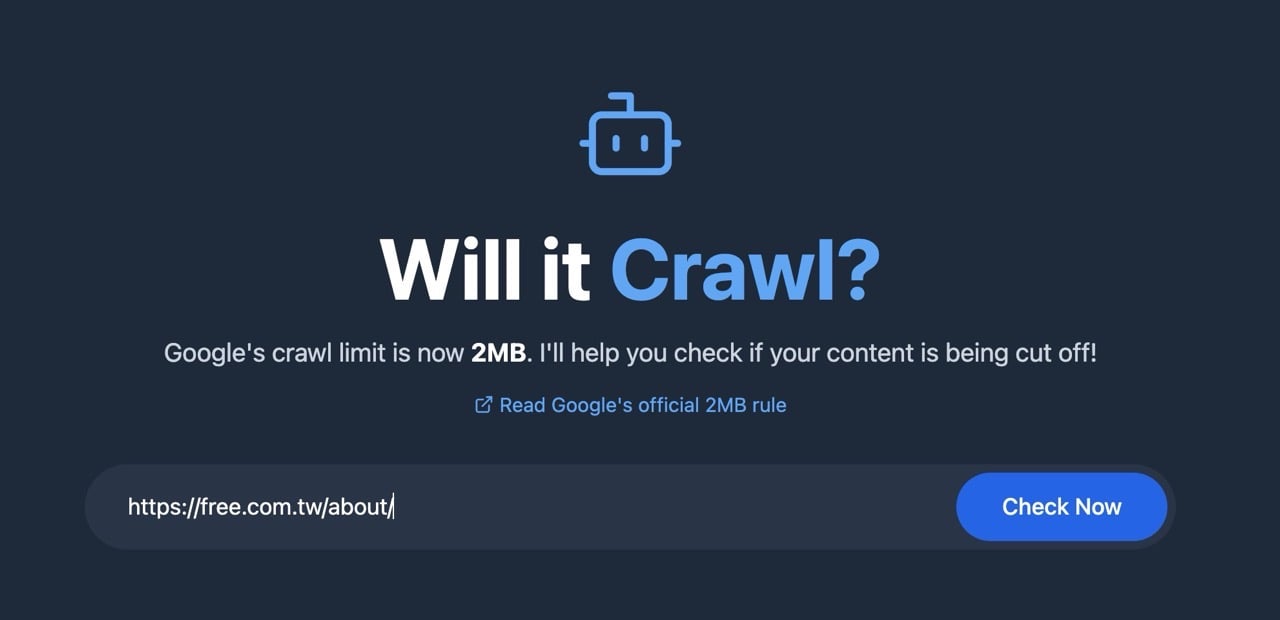
有國外開發者製作一個名為「Will it Crawl?」線上工具,可以在貼上網址後直接檢查網頁有沒有超過 2 MB,此外,結果頁面也會清楚顯示總頁面大小、可抓取比例、無法抓取比例和舊限制(15 MB)等資訊,透過可視化方式讓使用者知道 Googlebot 可抓取的範圍,更有利於找出網頁可能的問題。
網站資訊
使用教學
進入「Will it Crawl」網站後貼上要檢測的網址、點選「Check Now」就會立即檢測並顯示結果,操作上非常簡單!如果你對瀏覽器的開發者工具較不熟悉,這是一個更容易檢查網頁是否超過 2 MB 的方法。
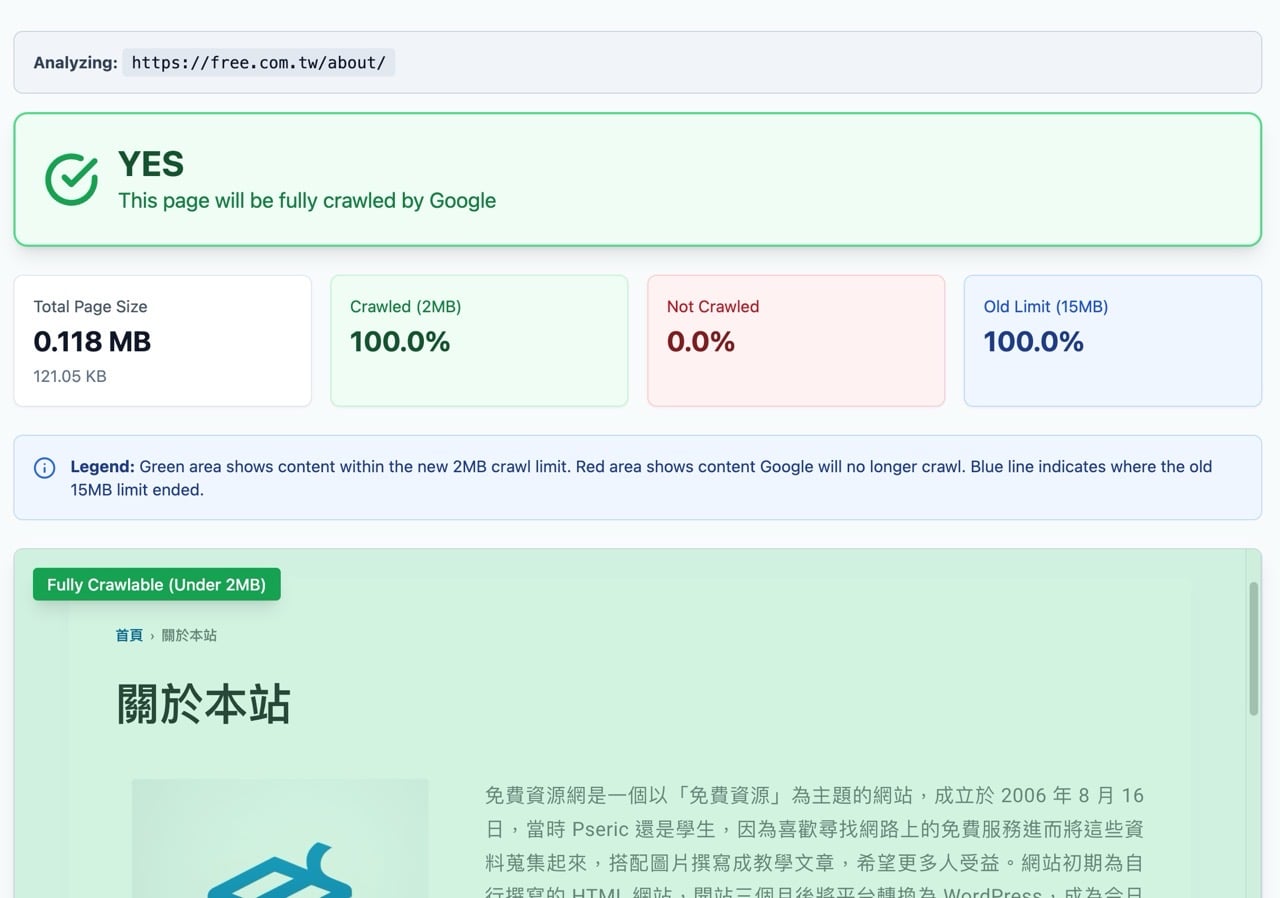
查看 Google 是否可完整抓取
結果頁面會顯示能否被 Google 完整抓取,如果標記為綠色勾勾代表在網頁大小方面沒有超過限制。
此外,下方也會顯示總頁面大小、可被抓取比例、無法抓取比例和舊限制(15 MB),下方標記綠色範圍的內容是在 2 MB 限制以內,如果有出現標示紅色範圍就代表 Google 無法完整抓取。
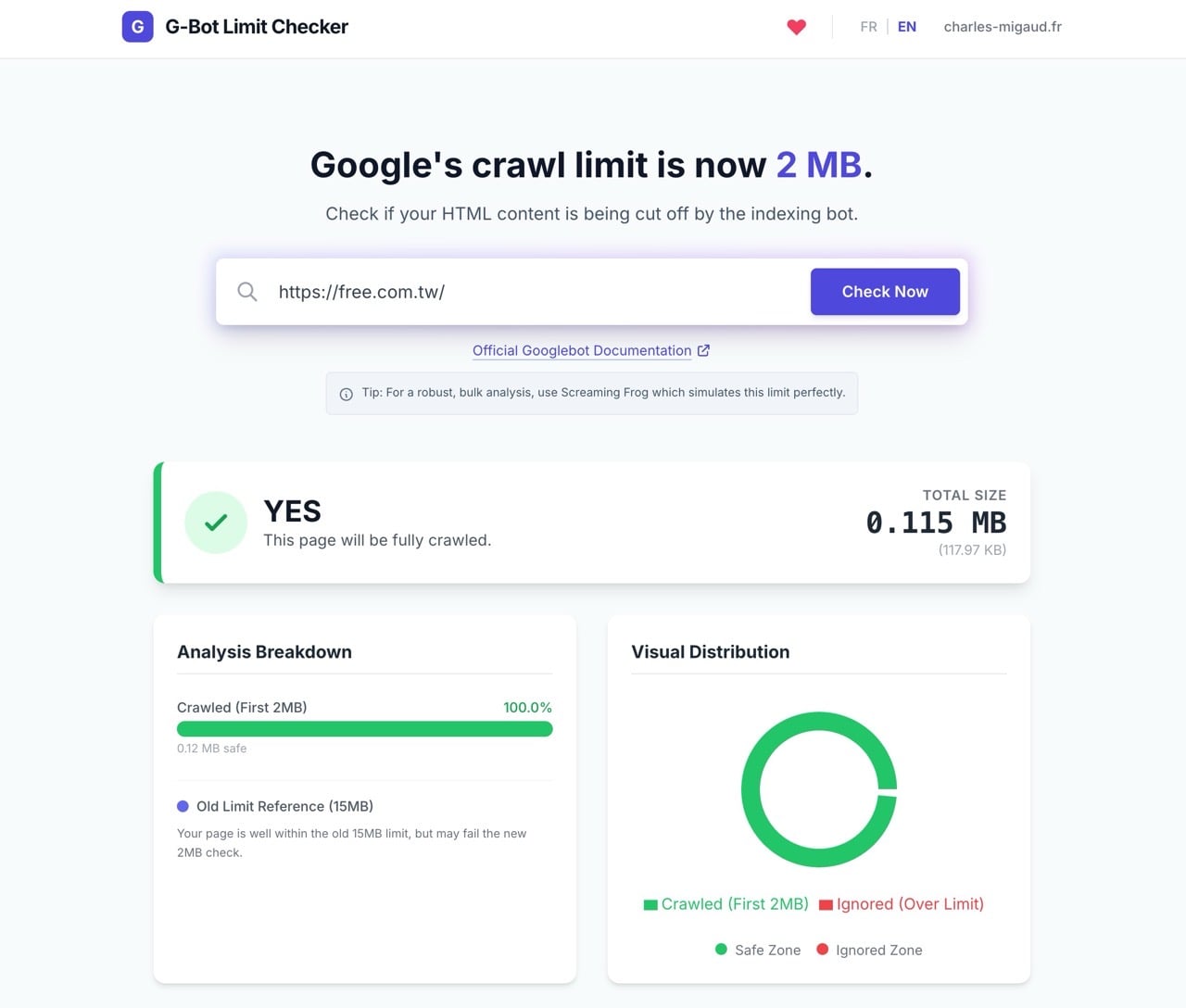
替代工具 G-Bot Limit Checker
如果 Will it Crawl 網站無法正常使用,推薦另一個「G-Bot Limit Checker」也有相同功能,將網址貼上後就能快速檢測有無超過 2 MB 網頁大小限制,一般來說網頁幾乎都不會超過這項限制。
總結
這次 Google 調整 Googlebot 的抓取大小限制其實是一個很容易被忽略,但對技術 SEO 相當重要的更新。
多數網站雖然不太可能超過 2 MB,不過如果使用大量 Base64 或內嵌資源,就可能影響索引完整性。透過像 Will it Crawl? 這類工具快速檢查,能讓網站管理更安心,也是一個值得定期檢測的小細節,若有經營網站的朋友,不妨撥冗檢查一下喔!
PakarPBN
A Private Blog Network (PBN) is a collection of websites that are controlled by a single individual or organization and used primarily to build backlinks to a “money site” in order to influence its ranking in search engines such as Google. The core idea behind a PBN is based on the importance of backlinks in Google’s ranking algorithm. Since Google views backlinks as signals of authority and trust, some website owners attempt to artificially create these signals through a controlled network of sites.
In a typical PBN setup, the owner acquires expired or aged domains that already have existing authority, backlinks, and history. These domains are rebuilt with new content and hosted separately, often using different IP addresses, hosting providers, themes, and ownership details to make them appear unrelated. Within the content published on these sites, links are strategically placed that point to the main website the owner wants to rank higher. By doing this, the owner attempts to pass link equity (also known as “link juice”) from the PBN sites to the target website.
The purpose of a PBN is to give the impression that the target website is naturally earning links from multiple independent sources. If done effectively, this can temporarily improve keyword rankings, increase organic visibility, and drive more traffic from search results.